


Poorly managed schedules create hidden costs for moving companies by causing idle crew time, missed or double-booked jobs, inefficient truck routes, higher fuel and payroll expenses, increased customer complaints, and management burnout. These issues reduce profitability and service quality. Using organized dispatching, real-time updates, automated communication, and centralized workflows helps eliminate these losses and keep operations efficient.
A moving company can look busy from the outside but still lose money every day without realizing it. Crews waiting around, trucks running inefficient routes, or customers unsure of what’s happening – these issues quietly drain profit. The problem isn’t effort; it’s scheduling and communication tools that can’t keep up with real moving operations. Small mistakes in planning stack up fast: wasted payroll, missed revenue, and unnecessary stress.
Modern moving software solves this by giving companies real-time visibility of crews and trucks, automated quoting for complex or multi-day commercial jobs, and better communication through integrated email and SMS with call options. When everything works together, you can run a tighter, more predictable operation and avoid costly scheduling mistakes.
Idle crews and wasted payroll
Payroll is one of the biggest expenses for any moving company, which makes idle time one of the most expensive hidden drains on profit. When schedules aren’t managed well, crews end up waiting around for trucks, missing paperwork, unclear job details, or last-minute dispatch changes. Even one hour of downtime adds up fast – a five-person crew sitting idle for sixty minutes can burn through $150 or more with nothing to show for it.
The good news is that these losses are completely preventable. With real-time visibility into crews and trucks, managers can spot gaps, make quick adjustments, and keep teams moving instead of waiting. MoversTech’s dispatch tools – built by actual movers – give you a simple, powerful way to stay ahead of delays and turn wasted hours into productive time, all without needing a complicated system or expensive setup.

Missed jobs and lost revenue
Every missed job is more than a blank spot on your schedule; it’s guaranteed revenue that goes straight to a competitor. Poor scheduling often leads to double-bookings, overbooking during busy months, or jobs that slip through the cracks when the moving operations calendar isn’t updated properly. These mistakes add up quickly and can quietly cost a moving company thousands of dollars each year.
Clear, organized scheduling helps prevent these issues before they start. When your team can easily see upcoming jobs, available crews, and open time slots, it becomes much harder for opportunities to be lost. A reliable operations calendar creates visibility, keeps bookings conflict-free, and ensures customers aren’t turned away because of preventable scheduling errors. The more control you have over the calendar, the more revenue you save and the easier it becomes to grow consistently.
Higher fuel and truck costs
Fuel and vehicle maintenance already take a large share of a moving company’s expenses, and poor scheduling makes those costs climb even higher. When routes aren’t planned well, trucks end up driving extra miles, backtracking, or making unnecessary trips. Over time, that means more fuel burned, faster wear on vehicles, and more frequent repairs. These added miles shorten truck lifespans and quietly drain profit without anyone noticing. Better scheduling helps assign jobs in logical clusters, reduces travel time, and balances truck usage. Even small improvements in routing can lower fuel costs and keep vehicles running efficiently for longer.
Frustrated crews and higher turnover
Movers rely on clear schedules to plan their day. When jobs change last minute or details are missing, frustration builds quickly. Confusion about start times, unclear instructions, or repeated scheduling errors can make even experienced movers feel unsupported. Over time, this leads to turnover — one of the most expensive hidden costs for a moving company.
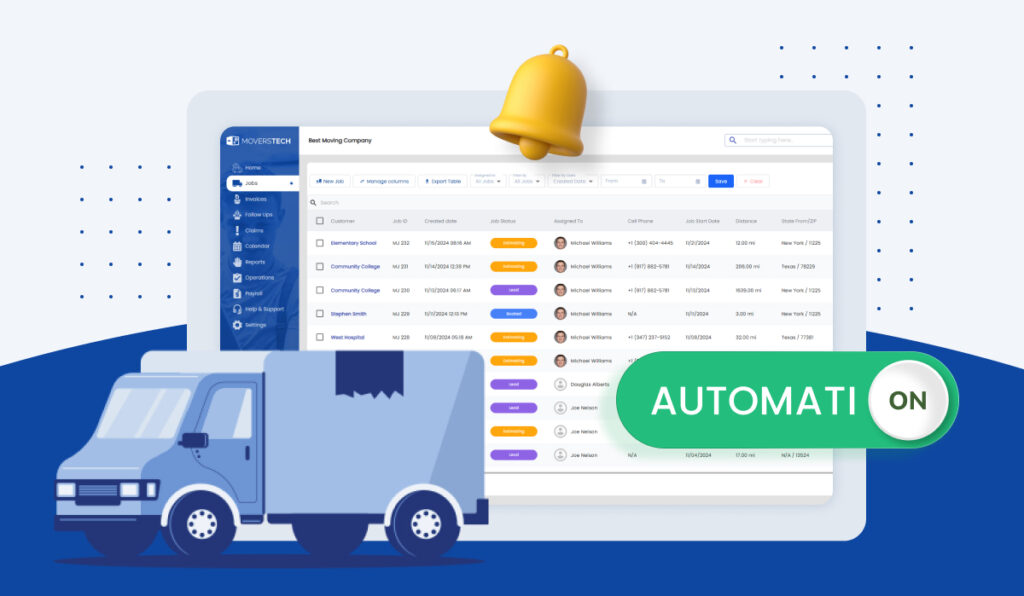
Better tools reduce this pressure. Automatic job updates, integrated SMS and email communication, and clear timelines help crews stay informed without constant phone calls. When crews feel supported and have the info they need, morale improves, and they stay longer — especially when scheduling ties neatly into quoting, dispatch, and even storage billing with auto-invoicing.
Damaged customer trust
Customers expect movers to arrive on time, stay organized, and communicate clearly. When schedules are poorly managed, delays or missing details can quickly erode trust. Even one late arrival or miscommunication can lead to negative reviews, which can hurt future business.
Stronger workflows help prevent these issues. Real-time dispatch updates, clear job details, and customer communication through integrated email and SMS make it easier to keep customers informed at every step. When quoting, scheduling, dispatch, and billing – including payment options like ACH and cards for storage or ongoing jobs – all work together, customers experience a smoother, more professional service from beginning to end.
Management stress and lost focus
When scheduling is disorganized, managers spend their days putting out fires instead of focusing on growth. Time that should be used for sales, planning, or improving operations gets absorbed by constant calls, rescheduling, and tracking down missing information. This reactive cycle drains energy and makes long-term progress difficult. Scheduling mistakes may seem small, but the stress they create affects the entire business. When schedules are clearer and easier to manage, managers can shift their attention to higher-value work rather than fixing avoidable problems every day.

The ROI of better scheduling
Improving scheduling has an immediate impact on profit. Even one prevented mistake – like avoiding a missed job or reducing wasted crew time – can cover the cost of better tools. When schedules run smoothly, moving companies see gains across the entire operation:
- Capture more revenue by preventing double-bookings and missed jobs.
- Reduce payroll waste by keeping crews productive instead of waiting.
- Lower fuel and truck expenses through smarter route planning.
- Deliver more reliable service, increasing reviews and referrals.
Small improvements add up quickly, turning scheduling into a direct driver of profitability and long-term growth
Stop hidden costs and start building profit
Poor scheduling may seem small, but it quietly drains revenue through wasted payroll, missed jobs, higher expenses, and customer frustration. These problems repeat until the process changes. Improving scheduling isn’t about working harder; it’s about giving your team clearer information and better tools. When crews know where to go, jobs stay organized, and managers aren’t fighting fires, your operation becomes more profitable. Many moving companies resolve these issues by adopting full-featured moving software – the kind built to simplify dispatching, communication, and daily workflows. It’s a smart reminder of why you need customizable CRM to stay competitive and protect your margins.
